

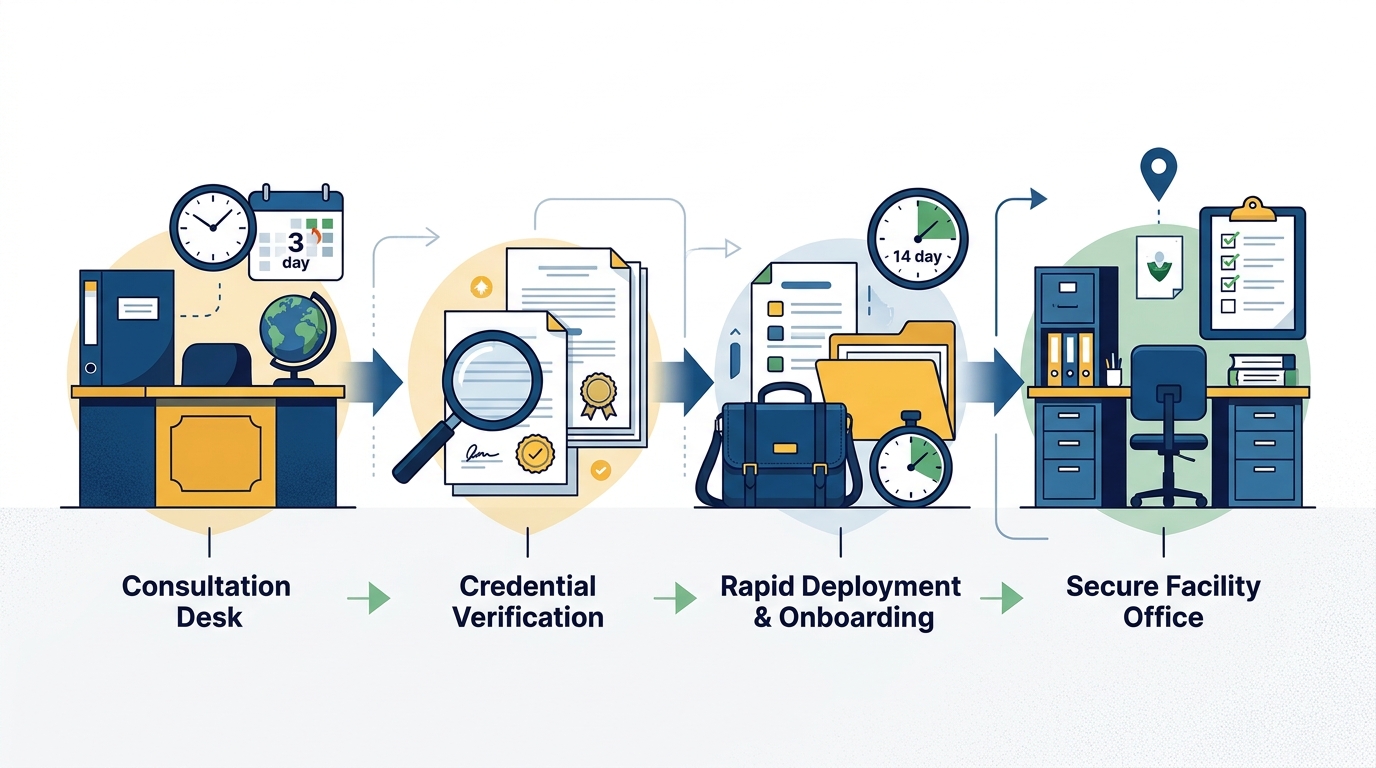
Staffing an interim MDS coordinator typically takes 3 to 14 days. This window covers initial consultation, credential verification, and onboarding. The exact duration depends on the facility's urgency and the coordinator's availability. Senior Care Solutions prioritizes rapid deployment to minimize documentation gaps during leadership transitions.
The Initial Assessment Phase
The process begins with a detailed operational audit. This phase usually lasts 1 to 2 days. The consultant reviews current MDS workflows, identifies documentation bottlenecks, and assesses the facility's electronic health record (EHR) configuration. This step ensures the incoming coordinator understands the specific clinical and administrative landscape before their first shift.
During this window, the facility leadership team defines the scope of the interim role. They clarify whether the coordinator will focus on new admissions, recertifications, or a mix of both. This clarity prevents role confusion and sets clear performance expectations. A well-defined scope allows the coordinator to prioritize high-impact tasks immediately.
Credential Verification and Compliance
Before any interim staff member enters the facility, rigorous background checks are mandatory. This verification process typically takes 2 to 5 days. It includes license validation, reference checks, and criminal background screening. These steps are non-negotiable for maintaining regulatory compliance and resident safety.
Facilities must ensure that the interim coordinator holds the appropriate licensure for their state. In Minnesota, for example, specific requirements apply to nursing leadership and MDS coordination roles. Senior Care Solutions maintains a vetted network of professionals who have already passed initial screenings, which can accelerate this phase. However, facility-specific background checks may still be required by local health departments.
Onboarding and System Integration
Once credentials are cleared, the onboarding phase begins. This stage generally spans 1 to 3 days. The coordinator receives access to the facility's EHR, MDS software, and internal communication platforms. They also review facility-specific policies, chain of command structures, and current survey findings.
Effective onboarding includes a shadowing period with the existing MDS team. This allows the interim coordinator to learn the facility's unique documentation habits and coding preferences. It also helps build rapport with nursing staff, which is critical for gaining accurate clinical data. A smooth onboarding process reduces the learning curve and ensures immediate productivity.
Active Deployment and Stabilization
The final phase is active deployment, where the coordinator assumes full responsibility for MDS tasks. This phase begins on day 3 to 5 and continues for the duration of the interim assignment. The coordinator manages the MDS calendar, conducts resident assessments, and ensures timely submission of assessments to the state.
During the first week of deployment, the coordinator focuses on stabilizing the MDS workflow. They address any overdue assessments and clear the backlog of pending reviews. This stabilization period is crucial for preventing compliance violations and maintaining accurate case mix data. The facility's Director of Nursing typically monitors this phase to ensure quality standards are met.
Key Takeaways
- The total timeline for staffing an interim MDS coordinator is typically 3 to 14 days.
- Initial assessment and scope definition take 1 to 2 days.
- Credential verification and background checks require 2 to 5 days.
- Onboarding and system integration span 1 to 3 days.
- Active deployment begins on day 3 to 5 and continues through the assignment.
- Facility-specific requirements can extend the timeline, so early planning is essential.
Frequently Asked Questions
How long does it take to verify an MDS coordinator's credentials?
Credential verification typically takes 2 to 5 days. This includes license checks, reference calls, and background screenings. The exact time depends on the responsiveness of previous employers and state licensing boards.
Can an interim MDS coordinator start on the same day?
Same-day starts are rare due to mandatory background checks. However, if the coordinator has already passed facility-specific screenings, a start within 24 to 48 hours is possible in urgent situations.
What is the role of the Director of Nursing during onboarding?
The Director of Nursing facilitates access to systems and introduces the coordinator to the MDS team. They also clarify facility-specific policies and expectations for documentation quality.
How does the facility's EHR affect the timeline?
Complex EHR systems may require additional time for user setup and training. If the facility uses a specialized MDS module, the coordinator may need extra time to familiarize themselves with the interface.
What happens if the interim coordinator is not a good fit?
Facilities can request a replacement if the interim coordinator is not a good fit. This process may add 3 to 5 days to the timeline, as a new candidate must undergo verification and onboarding.
Conclusion
Understanding the staffing timeline helps facility leaders plan for continuity of care. By anticipating the phases of assessment, verification, and onboarding, you can minimize disruption to your MDS workflow. Senior Care Solutions provides experienced interim MDS coordinators who are ready to step in and stabilize your documentation processes. To discuss your specific staffing needs, today.