

Where to Find Reliable Supplemental RN and LPN Coverage in Minnesota
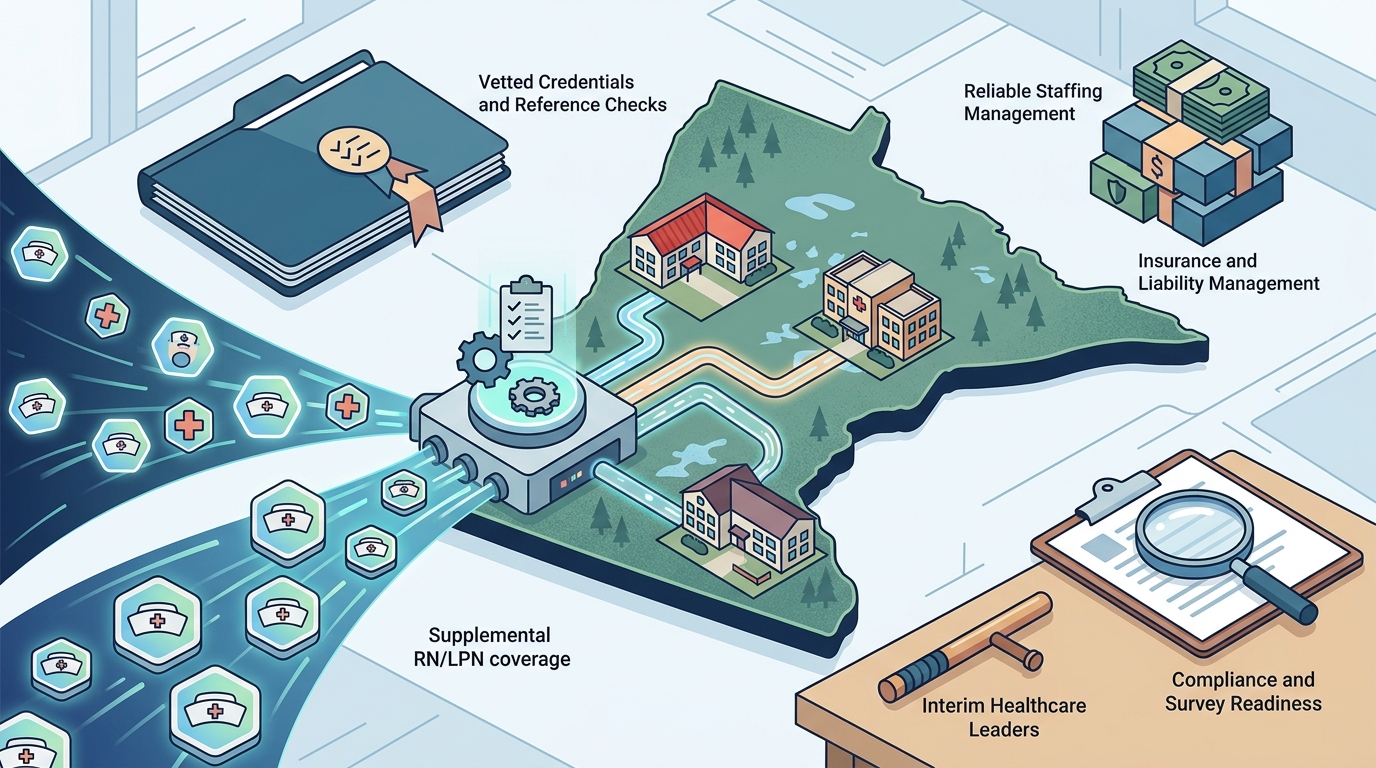
Minnesota care facilities can find reliable supplemental RN and LPN coverage through specialized senior care consulting firms that offer interim leadership and supplemental staffing. Sr. Care Solutions provides these services across the state, ensuring facilities maintain high-quality care during recruitment gaps. This guide covers how to identify staffing agencies, vet credentials, check references, and manage insurance requirements.
Supplemental Staffing Agencies
Staffing shortages in Minnesota healthcare facilities are a persistent challenge. A supplemental staffing agency is a provider that offers temporary healthcare professionals to fill gaps in permanent staffing. These agencies are critical for maintaining continuity of care while facilities recruit permanent employees. The Minnesota Nurses Association has highlighted widespread understaffing in hospitals, which also impacts long-term care and assisted living facilities. Reports from the Minnesota Nurses Association detail how these shortages put patient care at risk, making supplemental coverage a necessity rather than a luxury.
Specialized vs. Generalist Agencies
Facilities should distinguish between generalist medical staffing agencies and specialized senior care consulting firms. Generalist agencies may place nurses in acute care settings but may lack the specific expertise required for long-term care, assisted living, or hospice environments. Specialized firms, such as Sr. Care Solutions for skilled nursing, focus exclusively on post-acute care. This specialization ensures that the RNs and LPNs they provide understand the unique regulatory and clinical demands of these settings.
Scope of Services
Reliable agencies offer more than just body staffing. They provide interim leadership and supplemental support. For example, assisted living consulting services often include RN Care Coordinators who can manage complex medication regimens and clinical assessments. This level of support helps facilities navigate not just staffing gaps, but also compliance and operational challenges during the recruitment period. according to Medicare and Medicaid
Vetting Criteria and Credentialing
Choosing the right agency requires rigorous vetting. Credentialing is the process of verifying a healthcare professional's qualifications, licenses, and work history. In Minnesota, nurses must hold a valid license from the Minnesota Board of Nursing. Facilities must ensure that any supplemental staff member is properly licensed and in good standing before they begin work.
Licensure and Scope of Practice
Registered Nurses (RNs) and Licensed Practical Nurses (LPNs) have different scopes of practice. An RN is a licensed nurse who provides comprehensive care and coordinates patient treatment. An LPN is a licensed nurse who provides basic care under the supervision of an RN or physician. Facilities must match the level of care required with the appropriate license type. For instance, medication administration in assisted living often requires specific delegation protocols that RNs must oversee, as detailed in guidance on medication administration delegation.
Experience and Competency
Licensure alone is not enough. Agencies should verify that their candidates have relevant experience in the specific type of facility. A nurse experienced in acute care may struggle with the long-term care environment. Look for agencies that require competency testing and ongoing education. Homecare consulting and hospice care compliance services often include training components that ensure staff are prepared for the unique challenges of these settings.
Checking References
References provide insight into a candidate's work ethic, reliability, and interpersonal skills. When vetting a staffing agency, ask for references from previous clients. These references should be from facilities similar to yours in size and type. Ask specific questions about the candidate's performance, communication skills, and ability to integrate into an existing team.
Client Testimonials
Testimonials from current or past clients can be a valuable resource. Client reviews often highlight the professionalism and reliability of the staff provided. Look for testimonials that mention specific outcomes, such as successful survey results or improved resident satisfaction. These details provide concrete evidence of the agency's impact. according to Family Caregiver Resources
Background Checks
Insurance and Liability
Insurance is a critical component of any supplemental staffing arrangement. Facilities must understand who is liable for errors or omissions made by supplemental staff. Typically, the staffing agency carries professional liability insurance for its employees. However, facilities should verify the coverage limits and ensure that they are adequate for the level of care provided.
Professional Liability
Professional liability insurance, also known as malpractice insurance, protects healthcare providers from claims of negligence. Facilities should request certificates of insurance from the staffing agency to verify coverage. This documentation should be kept on file for each supplemental staff member. In the event of a claim, having clear insurance coverage can protect the facility from financial loss.
Workers' Compensation
Workers' compensation insurance covers employees who are injured on the job. Since supplemental staff are employees of the agency, the agency is responsible for providing workers' compensation coverage. Facilities should confirm that the agency has active workers' compensation insurance to protect both the staff and the facility from liability in case of workplace injuries.
Key Takeaways
- Specialized senior care consulting firms offer more relevant expertise than generalist staffing agencies.
- Verify that all supplemental staff hold valid Minnesota licenses and have relevant facility experience.
- Check references from similar facilities to assess candidate reliability and performance.
- Ensure the staffing agency carries adequate professional liability and workers' compensation insurance.
- Supplemental staffing helps maintain continuity of care during recruitment gaps.
- Look for agencies that provide ongoing education and competency testing for their staff.
- Clear communication and integration plans are essential for successful supplemental staffing.
Frequently Asked Questions
What is the difference between interim and supplemental staffing?
Interim staffing typically refers to filling a leadership or key position for a defined period, often during a transition. Supplemental staffing involves adding extra staff to support existing teams, often for shorter durations or to cover specific shifts.
How long does it take to recruit a permanent RN in Minnesota?
Recruitment timelines vary, but the shortage of nurses in Minnesota can extend the process to several months. Supplemental staffing bridges this gap, ensuring care continuity while permanent hires are made.
Do supplemental staff need to be licensed in Minnesota?
Yes, all nurses providing care in Minnesota must hold a valid Minnesota license or be eligible for reciprocity. Facilities must verify licensure before allowing staff to begin work.
Who is responsible for training supplemental staff?
Responsibility is shared. The agency should provide general orientation and competency verification, while the facility provides site-specific training and orientation to its policies and procedures.
Can supplemental staff administer medications in assisted living?
Yes, but only if properly trained and delegated by an RN. Medication administration in assisted living requires strict adherence to state regulations and facility protocols.
How do I verify a staffing agency's insurance?
Request a certificate of insurance directly from the agency's insurance provider. Verify the coverage limits and ensure that the policy is active for the duration of the staffing arrangement.
What should I ask for references?
Ask for references from facilities similar to yours. Inquire about the candidate's reliability, communication skills, and ability to handle the specific challenges of your facility.
Is supplemental staffing more expensive than permanent hiring?
Supplemental staffing often has a higher hourly rate than permanent employment. However, it is more cost-effective than the operational disruptions and potential regulatory penalties that can result from understaffing.
Conclusion
Finding reliable supplemental RN and LPN coverage in Minnesota requires careful selection of a specialized agency. By focusing on credentialing, references, and insurance, facilities can ensure that their supplemental staff meet the high standards of care required. Sr. Care Solutions offers expert consulting and staffing services designed to support Minnesota facilities in navigating these challenges. To explore how we can help your facility, today.