
Who Helps Skilled Nursing Facilities with PDPM and Clinical Reimbursement?
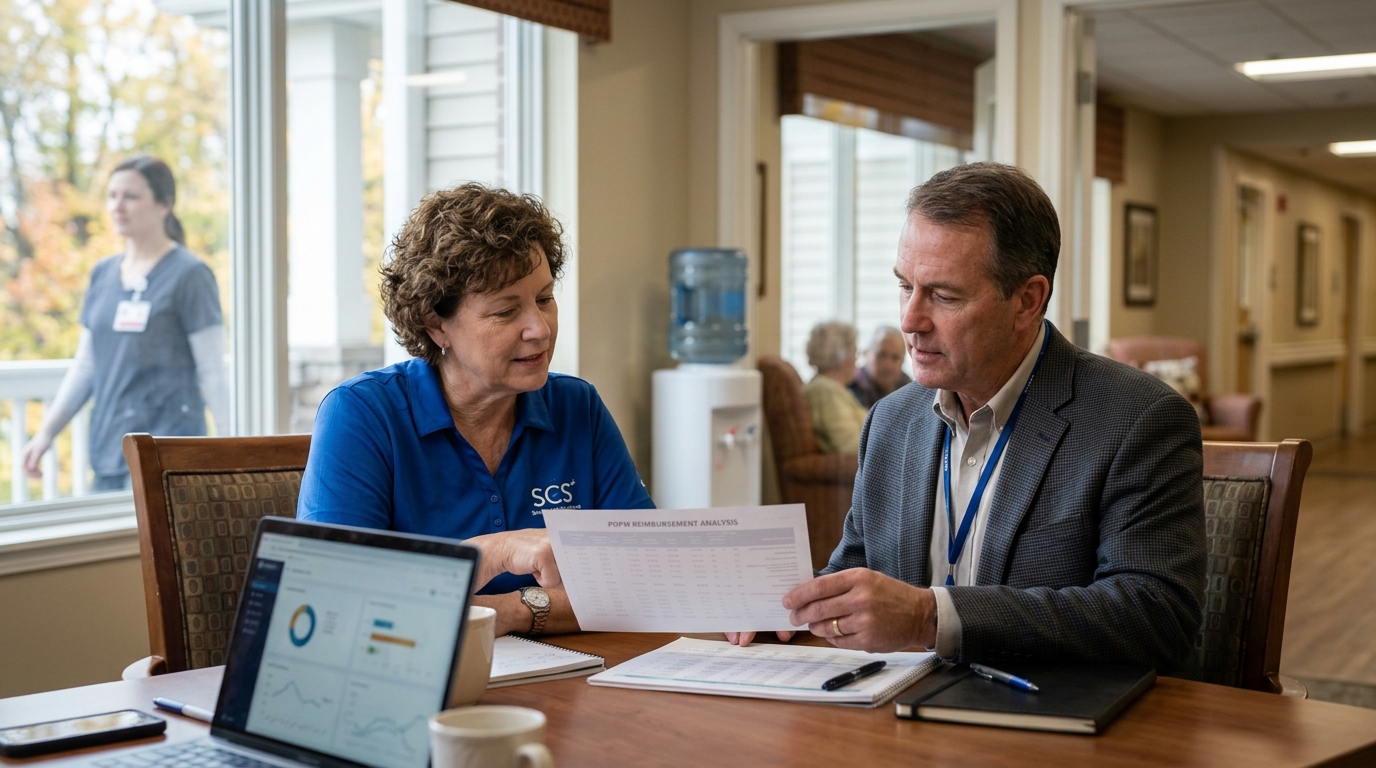
Skilled nursing facilities (SNFs) rely on specialized consulting firms and internal interdisciplinary teams to manage Patient-Driven Payment Model (PDPM) compliance and clinical reimbursement. Senior Care Solutions provides expert consulting, interim leadership, and educational services to help facilities capture appropriate revenue through accurate documentation. This guide covers PDPM classification, Minimum Data Set (MDS) coding, clinical reimbursement optimization, the role of reimbursement consultants, and documentation audits.
PDPM Classification
The Patient-Driven Payment Model (PDPM) is a Medicare payment system that determines reimbursement based on a resident's clinical needs rather than therapy minutes. Under this model, facilities are assigned to one of six clinical categories. These categories include Case Mix Group (CMG), Special Care High Nursing (SCHN), Special Care Low Nursing (SCLN), Special Care Very Low Nursing (SCVLN), Special Care High Therapy (SCHT), and Special Care Low Therapy (SCLT).
Understanding Clinical Categories
Each category requires specific diagnostic and functional criteria. For example, the Special Care High Nursing category often involves residents with chronic respiratory diagnoses who experience shortness of breath when lying flat. Accurate classification requires the interdisciplinary team to identify these conditions during the Assessment Reference Date (ARD) window. If a resident has a chronic lung condition and requires head-of-bed elevation for comfort, this must be clearly documented to support the appropriate payment category.
Impact on Facility Revenue
Correct PDPM classification directly impacts the daily rate a facility receives from Medicare. Misclassification can lead to significant revenue loss. Facilities must ensure that the primary diagnosis reflects the reason for the skilled stay and aligns with the therapy plan of care. This alignment is critical for both Medicare and state case mix reimbursement. according to Fiscal Year FY
MDS Coding
Minimum Data Set (MDS) coding is the process of selecting specific codes on the MDS assessment that reflect a resident's clinical status. The MDS serves as the primary invoice for reimbursement in skilled nursing facilities. Accurate coding requires a deep understanding of how specific items map to PDPM clinical categories and therapy groups.
Diagnosis Coding and NTA Points
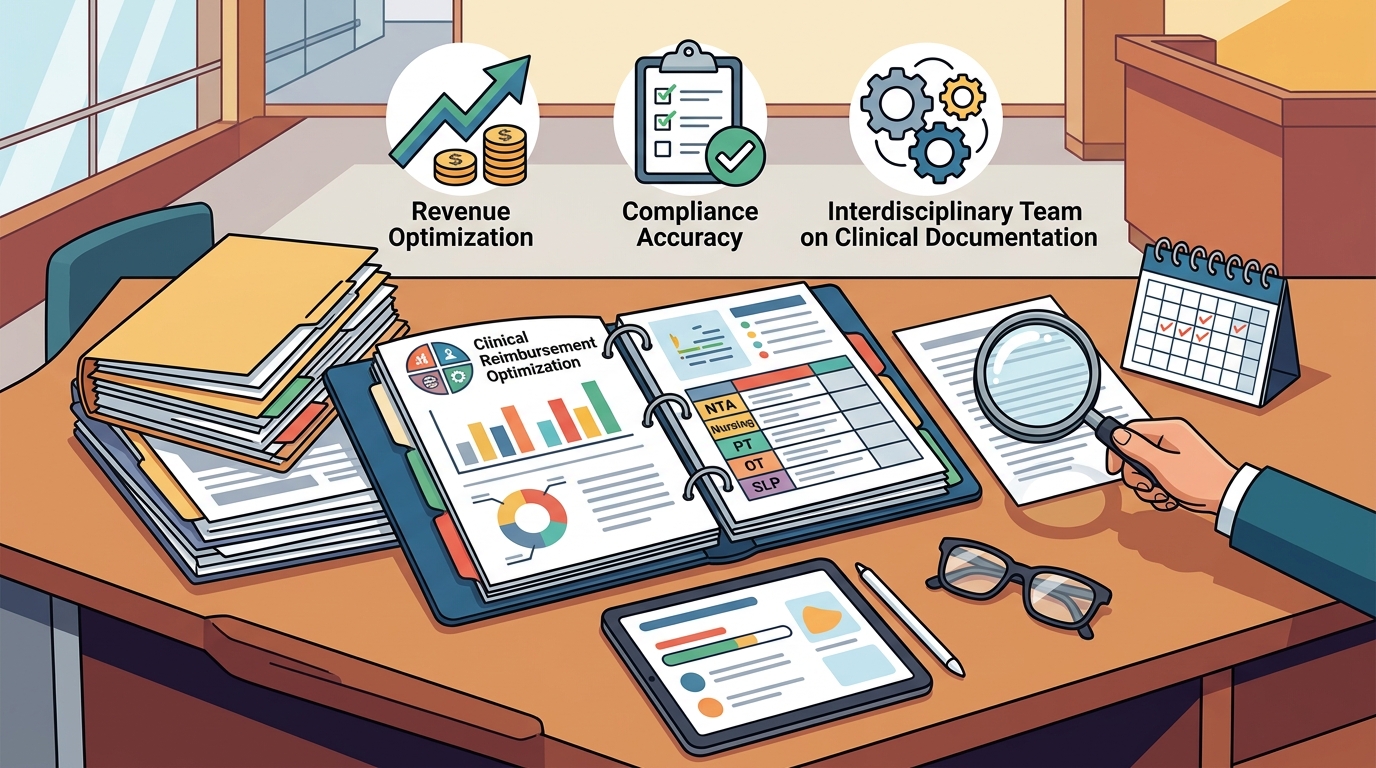
Diagnosis coding is a silent revenue driver in both Medicare and state case mix systems. Section I of the MDS requires the selection of a primary diagnosis that reflects the reason for the skilled stay. For instance, a resident presenting with confusion may require a diagnosis of encephalopathy rather than a general behavioral issue. The provider must support this diagnosis with documentation in the medical record. Incorrect primary diagnosis selection can result in lower reimbursement rates. according to Patient Driven Payment
Respiratory and Wound Documentation
Respiratory documentation is one of the most under-captured clinical categories. To capture Special Care High Nursing, a resident must have a chronic respiratory diagnosis and be short of breath with their head lying flat. This includes the use of recliners for sleep, multiple pillows, or fear of lying flat. Similarly, wound reimbursement is often missed due to incomplete documentation. Surgical wounds must be clearly identified, and treatments must be defined as active in medical or nursing orders. If a wound is present, treated, and active, it must be documented precisely in the Treatment and Assessment Record (TAR).
Clinical Reimbursement Optimization
Clinical reimbursement optimization is the strategic process of ensuring that all billable clinical services are accurately documented and coded. This involves training staff to recognize billable conditions and implementing systems that capture revenue without compromising care quality. Optimization is not about upcoding; it is about capturing what is already being done. according to Skilled Nursing Facility
Interdisciplinary Team Collaboration
The interdisciplinary team (IDT) plays a crucial role in reimbursement optimization. The team should meet two weeks prior to the MDS due date to review active diagnoses, activities of daily living (ADL) support, and behavioral observations. This meeting allows time for provider documentation of active diagnoses and nurse aide clarification of ADL scores. For Medicare and Advantage plans, the team must focus on the Speech-Language Pathology (SLP) component. This requires a neurological diagnosis, a SLP-related comorbidity, a BIMS score of 10 or less, and a swallow disorder or mechanically altered diet.
Monitoring Case Mix
Facilities must track and monitor their Medicare, private pay, and state case mix reimbursement. The MDS assessment is the invoice for getting paid, and unless facilities are occasionally checking the coding of these invoices, they may be losing significant revenue. Regular monitoring helps identify trends and areas for improvement in documentation practices. according to Proposed Fiscal Year
Reimbursement Consultants
Reimbursement consultants are specialized professionals who help facilities navigate complex payment systems and improve revenue capture. These experts provide customized consulting, interim leadership, and educational services to enhance facility effectiveness and compliance. They bring deep knowledge of regulations, reimbursement rules, and facility operations. according to Association Between the
Role of Consulting Firms
Firms like Senior Care Solutions provide expert support for skilled nursing facilities. Their services include regulatory support, mock surveys, clinical reimbursement analysis, and electronic health record configuration. Consultants help facilities understand what specific diseases, conditions, treatments, and ADL support count toward reimbursement. They also provide interim leadership for roles such as Director of Nursing (DON) and MDS coordinators, ensuring continuity of care during transitions. according to Assessments care plans
Training and Education
Consultants often provide training and education to facility staff. This includes nursing leadership mentoring, HHA training, and customized training topics for SNF, assisted living, home care, and hospice. By strengthening the team's knowledge, consultants ensure that high-quality care and operational excellence are maintained. This educational approach helps facilities build internal capacity for ongoing reimbursement management.
Documentation Audits
Documentation audits are systematic reviews of clinical records to ensure accuracy, completeness, and compliance with reimbursement requirements. These audits help identify gaps in documentation that may lead to revenue loss or regulatory findings. Regular audits are a critical component of a facility's quality assurance and performance improvement (QAPI) program.
Types of Audits
Facilities should conduct various types of audits, including MDS audits, therapy documentation audits, and respiratory assessment audits. For example, a respiratory audit might verify that nebulizer treatments are documented with the required 7 consecutive days and at least 15 minutes per day. The minutes must include set-up, pre-assessment, post-assessment, lung sounds, oxygen saturation, and respiratory status response. If these details are not clearly documented, the treatment does not count toward reimbursement.
Implementing Audit Tools
Facilities can implement simple tools to support documentation audits. These tools might include running monthly diagnosis reports for common conditions like COPD, asthma, and emphysema. They can also create standardized quarterly respiratory assessments and audit nebulizer EMAR entries weekly. By cross-checking TAR entries with progress notes, facilities can ensure that wound treatments are documented at least daily. These systematic approaches help facilities capture all eligible revenue.
Key Takeaways
- PDPM classification is based on clinical categories, not therapy minutes, and requires accurate diagnosis and functional documentation. according to Skilled Nursing Facility
- MDS coding is the primary invoice for reimbursement, and accurate coding of diagnoses and ADLs is critical for revenue capture. according to Impact of Accurate
- Clinical reimbursement optimization involves interdisciplinary team collaboration and regular monitoring of case mix reimbursement.
- Reimbursement consultants provide expert support, including consulting, interim leadership, and training, to help facilities navigate complex payment systems.
- Documentation audits are essential for identifying gaps in clinical records and ensuring compliance with reimbursement requirements.
- Respiratory and wound documentation are common areas for missed revenue and require specific, precise documentation practices.
- Facilities should implement systematic audit tools and regular IDT meetings to maximize reimbursement and maintain high-quality care.
Frequently Asked Questions
What is the Patient-Driven Payment Model (PDPM)?
The Patient-Driven Payment Model (PDPM) is a Medicare payment system that determines reimbursement for skilled nursing facilities based on a resident's clinical needs, including diagnoses, functional status, and therapy requirements, rather than the number of therapy minutes provided. according to SNF PPS Payment
How does MDS coding affect reimbursement?
MDS coding affects reimbursement by determining the clinical category and therapy group assigned to a resident. Accurate coding of diagnoses, ADLs, and behaviors ensures that the facility receives the appropriate payment rate from Medicare or state case mix systems.
What are the six PDPM clinical categories?
The six PDPM clinical categories are Case Mix Group (CMG), Special Care High Nursing (SCHN), Special Care Low Nursing (SCLN), Special Care Very Low Nursing (SCVLN), Special Care High Therapy (SCHT), and Special Care Low Therapy (SCLT). Each category has specific diagnostic and functional criteria that must be met.
Who should be involved in reimbursement optimization?
The interdisciplinary team (IDT), including nurses, therapists, social workers, and providers, should be involved in reimbursement optimization. External consultants can also provide expert guidance and training to help the team capture all eligible revenue.
What is the role of a reimbursement consultant?
A reimbursement consultant helps facilities navigate complex payment systems, identify missed revenue opportunities, and implement best practices for documentation and coding. They provide consulting, interim leadership, and educational services to improve facility effectiveness and compliance. according to Outcomes of Patients
How often should facilities conduct documentation audits?
Facilities should conduct documentation audits regularly, such as monthly or quarterly, depending on the type of audit. Regular audits help identify gaps in documentation and ensure compliance with reimbursement requirements.
What is the importance of respiratory documentation in PDPM?
Respiratory documentation is important in PDPM because it can support the Special Care High Nursing category. To qualify, a resident must have a chronic respiratory diagnosis and be short of breath when lying flat. This must be clearly documented during the Assessment Reference Date window.
How can facilities improve their MDS coding accuracy?
Facilities can improve MDS coding accuracy by training staff on specific diseases, conditions, and ADL support that count toward reimbursement. They should also hold IDT meetings prior to the MDS due date to review documentation and ensure provider support for active diagnoses.
Conclusion
Managing PDPM and clinical reimbursement requires a combination of accurate documentation, interdisciplinary collaboration, and expert guidance. Facilities that invest in training, regular audits, and consulting support are better positioned to capture appropriate revenue while maintaining high-quality care. Senior Care Solutions offers comprehensive services to help skilled nursing facilities navigate these complex systems. To learn more about how we can support your facility, today. according to Skilled Nursing Facility