

What Determines Your Facility's PDPM Classification and Reimbursement Rates?
PDPM classification is determined by a resident's clinical acuity, functional status, and comorbidities, which dictate the specific case-mix group assigned to them. These groups directly drive the per-diem reimbursement rates a skilled nursing facility receives from Medicare. Understanding these drivers is essential for accurate revenue forecasting and clinical documentation integrity. according to Clinical Driver Assessments
The Core Drivers of PDPM Case-Mix Groups
The Patient-Driven Payment Model (PDPM) replaced the previous RUG-IV system in 2019 to better align payment with actual patient needs. PDPM is a payment model that uses clinical data to determine the level of care required for each resident. The model evaluates several key factors to assign a resident to one of 80 case-mix groups. These groups range from low-acuity to high-acuity, reflecting the intensity of nursing and therapy services required.
The primary driver is the Clinical Case Mix Index (CCMI). This index is calculated based on the resident's diagnosis-related groups (DRGs) and functional limitations. A higher CCMI indicates greater clinical complexity and results in a higher reimbursement rate. Facilities must ensure that their Medical Record (MDS) documentation accurately reflects the resident's condition to capture the appropriate CCMI score. according to Clinical Driver Assessments
Clinical Complexity and Diagnosis
Diagnoses are coded using ICD-10-CM codes. The presence of certain high-acuity diagnoses, such as severe heart failure or complex wound care, significantly increases the CCMI. For example, a resident with a simple hip fracture may have a lower CCMI than a resident with a hip fracture and concurrent severe pneumonia. Accurate coding is critical because it directly impacts the financial viability of the facility's patient census.
Functional Status and Therapy Needs
Functional status is another major determinant of PDPM rates. The model assesses a resident's ability to perform Activities of Daily Living (ADLs) and Instrumental Activities of Daily Living (IADLs). These assessments are captured in the MDS sections regarding mobility and self-care. A resident who requires assistance with bathing, dressing, and transferring will be assigned to a higher functional group than one who is independent.
Therapy needs also play a significant role. The model considers the type and intensity of physical, occupational, and speech therapy required. Residents who need daily therapy services to improve mobility or communication skills contribute to a higher reimbursement rate. Facilities must document therapy goals and progress accurately to ensure that the therapy component of the PDPM calculation is maximized appropriately.
Impact of Mobility Limitations
Specific mobility limitations, such as the need for a wheelchair or gait belt, are key indicators of functional impairment. These limitations are often linked to higher reimbursement rates because they require more nursing staff time and specialized equipment. For instance, a resident who is bed-bound requires more frequent repositioning and skin care, which increases the nursing intensity score.
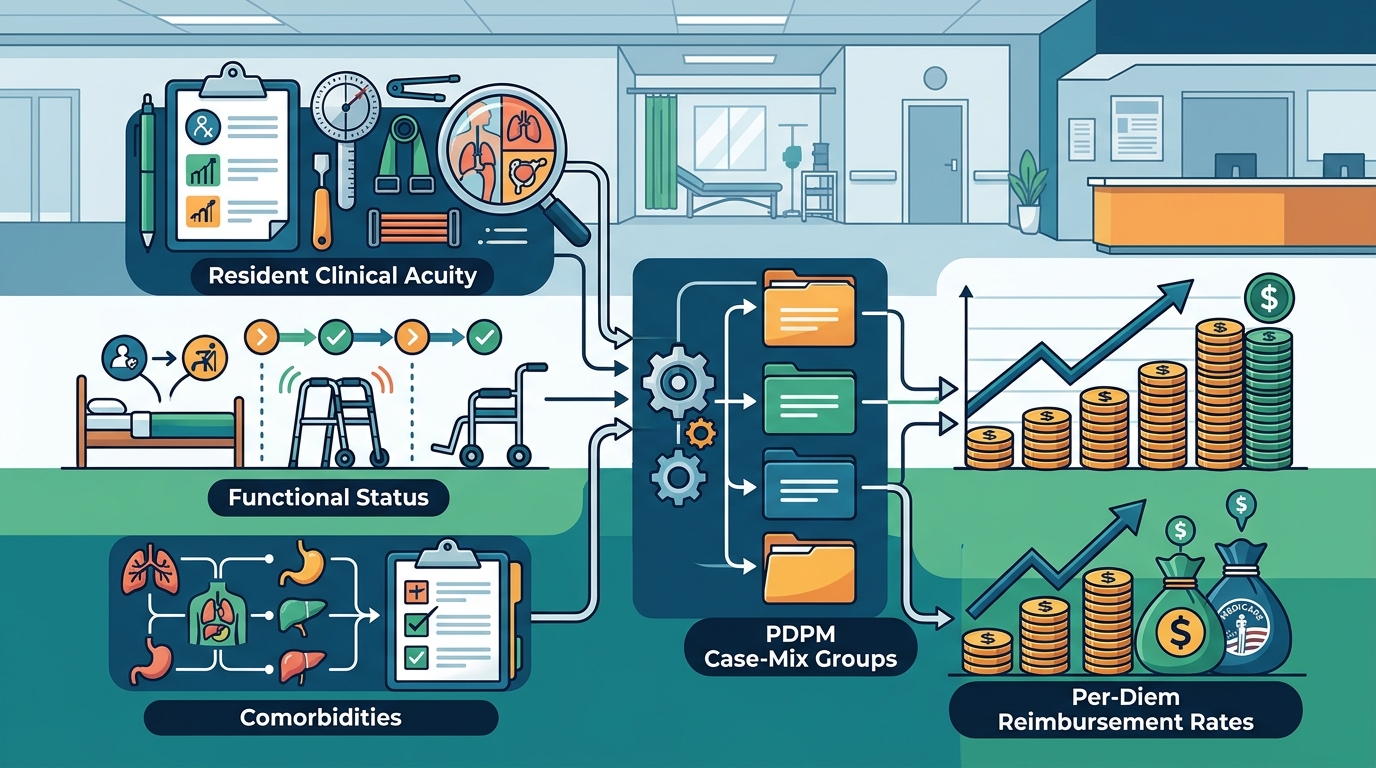
Comorbidities and Acuity Levels
The Role of MDS Documentation in Payment
The Minimum Data Set (MDS) is the primary source of data for PDPM calculations. The MDS is a standardized assessment tool that collects information about a resident's health status, functional abilities, and care needs. The accuracy of the MDS directly determines the PDPM case-mix group and, consequently, the reimbursement rate. Errors in MDS documentation can lead to significant revenue loss or compliance issues.
Facilities must ensure that their MDS coordinators and clinical staff are trained in accurate documentation practices. This includes understanding the specific questions in the MDS and how they map to PDPM variables. For example, the MDS section on cognition and mood can impact the behavioral health component of the PDPM calculation. Accurate documentation of cognitive impairment, such as dementia, can result in a higher reimbursement rate due to the increased care needs.
Common Documentation Errors
Common errors include failing to update the MDS after a change in condition or using vague language that does not reflect the resident's actual needs. These errors can lead to underpayment or audit findings. Facilities should implement regular audits of MDS data to identify and correct documentation gaps. This proactive approach helps ensure that the facility is receiving the full reimbursement it is entitled to.
Strategies for Optimizing PDPM Revenue
Optimizing PDPM revenue requires a strategic approach to clinical documentation and case management. Facilities should focus on improving the accuracy and completeness of their MDS data. This involves training staff on the specific drivers of PDPM classification and implementing quality control measures. By doing so, facilities can ensure that they are capturing the full value of the care they provide. according to News School of
Collaboration with Clinical Teams
Effective PDPM optimization requires collaboration between clinical, administrative, and financial teams. Clinical staff must provide accurate and timely information for the MDS, while administrative staff must ensure that the data is processed correctly. Financial teams should analyze the impact of PDPM changes on the facility's budget and revenue. This cross-functional approach ensures that all aspects of PDPM are managed effectively.
Key Takeaways
- PDPM classification is driven by clinical acuity, functional status, and comorbidities.
- The Clinical Case Mix Index (CCMI) is a key metric that determines reimbursement rates.
- Accurate MDS documentation is essential for capturing the correct PDPM case-mix group.
- Functional limitations and therapy needs significantly impact reimbursement rates.
- Comorbidities and high-acuity diagnoses increase the complexity and payment level.
- Regular audits of MDS data help identify and correct documentation errors.
- Strategic collaboration between clinical and financial teams optimizes PDPM revenue.
Frequently Asked Questions
What is the Patient-Driven Payment Model (PDPM)?
PDPM is a Medicare payment model for skilled nursing facilities that uses clinical data to determine reimbursement rates based on patient acuity and care needs. according to What determines your
How is the Clinical Case Mix Index (CCMI) calculated?
The CCMI is calculated using a resident's diagnosis-related groups and functional limitations, reflecting the overall complexity of their care needs.
What role does the MDS play in PDPM?
The MDS provides the clinical and functional data used to assign residents to PDPM case-mix groups, which directly determine reimbursement rates.
How can facilities improve their PDPM reimbursement?
Facilities can improve reimbursement by ensuring accurate MDS documentation, capturing all relevant comorbidities, and monitoring their PDPM performance regularly.
What are the consequences of MDS documentation errors?
Documentation errors can lead to underpayment, audit findings, and compliance issues, resulting in significant financial losses for the facility.
Conclusion
Understanding the factors that determine PDPM classification is crucial for skilled nursing facilities seeking to maintain financial stability and provide high-quality care. By focusing on accurate MDS documentation, capturing clinical complexity, and monitoring performance, facilities can optimize their reimbursement rates. Sr. Care Solutions offers expert consulting and interim leadership to help facilities navigate these complex regulatory and financial landscapes. Our team provides the tools and expertise needed to ensure compliance and operational excellence in post-acute care.